You've Already Paid for It: Turning a Forgotten Levy Pot into Skills Your Team Actually Needs
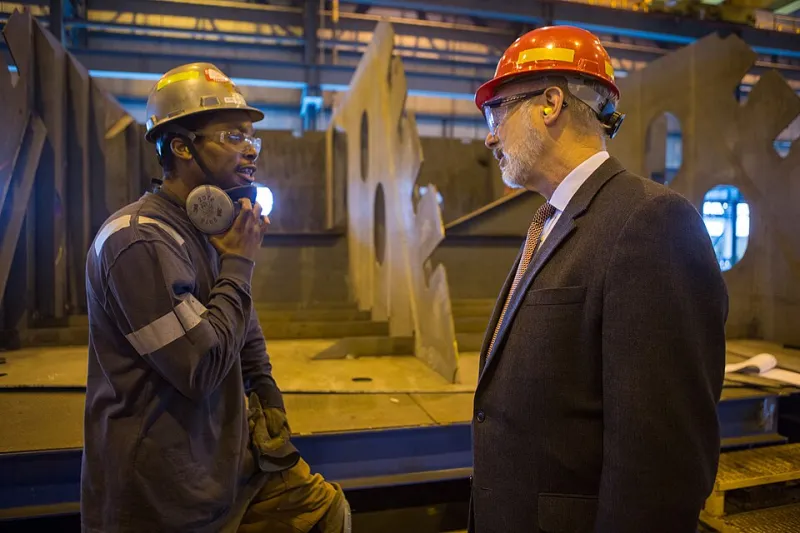
Photo: governortomwolf, CC BY 2.0, via Wikimedia Commons
There's a line in a lot of UK training budgets that nobody quite enjoys defending. Employers with a pay bill north of £3 million hand over 0.5% of it every month as the apprenticeship levy, the Treasury adds a 10% top-up, and the money lands in a digital account with a timer attached. Two years later, whatever hasn't been spent quietly disappears.
Plenty of finance directors have made their peace with this. It's a tax. It's the cost of doing business. Move on.
Except it isn't quite that, and treating it as such is exactly where the skills go missing. This is money you have already paid for development. It's sitting there, ring-fenced, waiting for somebody to aim it at a real gap in the team. The only genuine question is whether you spend it deliberately or lose it by default.
What the pot will and won't buy
Start with the constraints, because they shape everything that follows.
Levy funds cover apprenticeship training and end-point assessment, delivered by an approved provider against a published standard. They don't cover wages, they won't stretch to most kit or travel, and they won't buy your team a two-day negotiation course. If what you want is a one-off workshop, that's a different budget line — and a different article.
There's also the shape of the thing. An apprenticeship is a job with training built into it, not training with a job bolted on. Twelve months minimum, a real role doing real work, and somebody inside the business — usually the line manager — who takes the learning seriously rather than signing forms in a corridor.
Worth saying plainly: funding rules are devolved. The levy is collected UK-wide, but how it's spent differs in England, Scotland, Wales and Northern Ireland, and the detail shifts with each round of reform. The old 20% off-the-job formula that shaped a decade of workforce planning has been loosened in England, with more weight now on a training plan that genuinely builds new capability. Check the current guidance before you commit to anything — but the underlying principle survives every rule change: the learning has to be real, timetabled and evidenced.
Where teams quietly lose the money
Four leaks, in rough order of how often we see them.
Expiry. Funds are drawn down oldest-first and vanish after 24 months. An organisation that spends nothing for a year has effectively donated a year's levy to the Exchequer, and nobody sends a thank-you note.
Standard-chasing. Someone discovers the pot, panics about the balance, and picks whichever standard is easiest to launch before the deadline. Six months later there's an apprentice doing a qualification that has nothing to do with the work in front of them, a demoralised learner and a line manager who now tells everyone the levy is a waste of time.
Functional skills. Maths and English requirements are non-negotiable, and they're the single most common reason a start date slips from September to January. If you're putting forward an experienced colleague who left school at sixteen with no GCSE maths, plan for that support early rather than discovering it in week three.
Lead times. Providers fill up. Enrolment windows close. A decision taken in November often means a start in February, which matters enormously if you're racing a funding expiry.
There's also a quiet fifth leak: nobody realises how much of an unused pot can be pledged to other employers, including smaller firms in your supply chain. That's not charity — it's a way of building capability in the businesses you depend on, and it costs you nothing that you weren't already going to lose.
Work backwards from the gap, not the standard
Here's the habit that changes everything. Don't open the list of standards and ask what looks interesting. Sit down with a team leader and ask a blunter question: what is the work we keep getting wrong, deferring, or paying someone else to do?
That conversation usually throws up two or three names. The supervisor who has been "acting up" for eighteen months without a title or a qualification. The person who genuinely owns the master spreadsheet but has never been taught anything beyond what they worked out themselves. The maintenance technician who can fix anything mechanical and is now expected to handle the control systems too.
Those are apprenticeship-shaped problems, and each one maps to a real standard at a real level. The trick is to pick the one where the role and the standard genuinely overlap — where the training will make the day job easier rather than adding an evening's homework on top of it.
For smaller employers who don't pay the levy, the mechanism is different but the logic is identical. You reserve funds through the apprenticeship service and the government covers the large majority of the cost, with a small employer contribution that's reduced or waived in certain circumstances. For a fifteen-person firm, that's often the difference between training being theoretical and training actually happening.
The part everyone underestimates
The provider delivers the qualification. The line manager delivers the capability.
Where apprenticeships work, you can usually trace it to a manager who holds a short, regular conversation — twenty minutes a fortnight, say — about what's being learned, what's being tried and what's going wrong. Where they fail, the learner is left to juggle study, work and a manager who regards the whole thing as an administrative inconvenience.
If you're not prepared to protect that half-hour, be honest about it before you spend the money. Choose a different learner, or a different route entirely.
A short checklist before you commit
- Is there a genuine role with a genuine gap, not a convenient name on a spreadsheet?
- Does the standard match the work, and does the level match the person?
- Has anyone checked the functional skills position?
- Is the line manager briefed, willing and timetabled?
- Is the start date early enough to beat the funding clock?
- If you're not going to use it all, is there a supply-chain partner who could?
The levy was never designed to be exciting. It was designed to be spent on skills. If your organisation has been treating it as a sunk cost, the good news is that the money is still there — and the gap it could close is probably already on a list somewhere in the business.