No Projector, No Problem: A Workshop Format Where the Room Does the Work
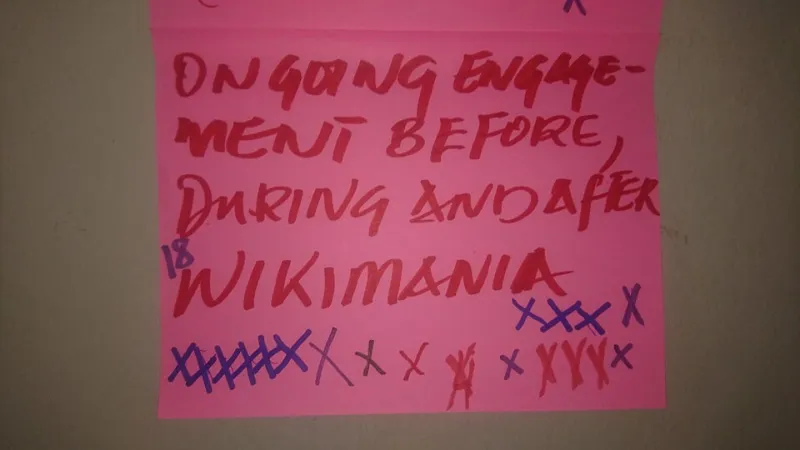
Photo: Discott, CC BY-SA 4.0, via Wikimedia Commons
I once watched a projector fail in the first ten minutes of a half-day session. No backup laptop, no printed deck, nothing but a flip chart and thirty-odd people who had cleared their diaries for the morning.
The facilitator did the only sensible thing: she put the deck away and asked the room what kept going wrong. Two hours later, people were rehearsing a difficult customer conversation in threes, giving each other feedback, and doing it again — better. It was the most useful training I've seen in years, and it happened by accident.
It shouldn't take a dead projector to get there.
What slides are actually for
Let's be fair to PowerPoint. It's a decent tool for sharing a reference document, recording statutory content and letting people who couldn't attend catch up later. It's also remarkably good at making a facilitator feel prepared.
What it isn't good at is building a skill. A slide can describe a technique; it can't help anyone perform one. And the moment the deck becomes the deliverable, the room quietly reclassifies itself as an audience. People take notes, nod, feel briefly inspired, and go back to their desks with a PDF nobody opens again.
Then there's the more awkward truth. Slides serve the presenter's comfort, not the learner's. Every minute spent narrating a bullet point is a minute nobody is practising anything.
Three anchors to build the session around
Strip the slides out and you need something to hold the structure together. In practice, three things do the job.
A recognisable scenario. Not a case study from a textbook — a situation this specific team genuinely argues about. The handover that always loses information. The call that escalates too fast. The quote that gets rebuilt three times because nobody trusts the template.
A practice loop. Do it, get feedback, do it again. Three rounds, not one. The second attempt is where the learning lands, because the first is always a performance.
Peer coaching. Pair people up with a real problem each and let them think out loud at each other. Most teams have more expertise in the room than they use, and a facilitator who talks for two hours never finds out.
The format, with timings
Here's a shape that works for a group of eight to twenty in a two-and-a-half hour slot.
0:00–0:10 — The room sets the agenda. Everyone writes one sticky note: the bit of this job that goes wrong most often. Post them, cluster them, read them out. You now have a shared brief and nobody is wondering why they're here.
0:10–0:25 — The scenario. Hand out a single printed page describing a realistic situation in plain language. Read it together. Clarify the brief, not the theory.
0:25–0:55 — Round one. Trios: one person does, one plays the other party, one observes against three criteria written on the flip chart. Rotate. Ten minutes each.
0:55–1:10 — Feedback, three items only. What worked, what got in the way, what to change. Any more and people defend rather than listen.
1:10–1:20 — Break. Genuinely take it.
1:20–1:45 — Round two, harder variant. Same scenario with a complication: the deadline moves, the budget disappears, the colleague who was going to help is off sick. This is where people find out whether the technique survives contact with reality.
1:45–2:05 — Peer coaching. Pairs, one live problem each, ten minutes a side. The coach asks questions and does not solve it for them.
2:05–2:20 — Commitments. One thing to try this week, written down, with a named person who will ask about it. This is the single highest-value ten minutes of the whole session.
2:20–2:30 — Close. Hand out a one-page field guide — the three criteria, the trickiest step, the thing to remember. That's your reference material. It's more useful, and more likely to be kept, than forty slides.
What you actually need in the room
Printed scenario cards. A flip chart and marker pens. Sticky notes. A timer everyone can see. Chairs that move. That's it.
The one-piece-of-kit rule matters more than it sounds. A room with desks in rows and a screen at the front tells everyone what kind of session this is before you say a word.
Keeping it on the rails
Two things will threaten the timing: questions that need a policy answer, and the one person who wants to debate the premise.
For the first, keep a visible "car park" sheet and promise a written reply within the week. It's a real promise — honour it. For the second, use the two-minute rule: any point that can't be resolved quickly gets written down and revisited at the end, if there's time. Most of the time there isn't, which is information in itself.
And build in one deliberate reset — after the break, or whenever energy dips. Two minutes standing up, changing seats, restating the purpose. It costs almost nothing and rescues the second half.
Selling it to the sceptics
Somebody will ask where the materials are. Answer the question they're really asking, which is "how will I know this worked".
Lead with the outcome, not the format. Offer a pilot with eight or ten people before rolling it out. Show the artefacts afterwards: the scenario cards, the commitments list, the field guide. Then measure at thirty days — did people do the thing they said they'd do, and did their manager notice a difference? That's a far better signal than a satisfaction score collected while the biscuits are still out.
If your compliance or audit people need a record that training happened, a dated attendance sheet and a one-page field guide do the job cleanly. A deck isn't a record; it's a document that proves someone built slides.
Where slides still earn their place
This isn't a crusade. Health and safety briefings, statutory content, induction at scale, anything being recorded for people who genuinely can't attend — use the deck, use it well, and keep it short.
The test is simple. If the goal is that people know something, present it. If the goal is that people can do something, get out of the way and let them try it, badly, in front of each other.
The best sessions I've sat in didn't have a single slide. They had a room full of people having a go.