The Expert Is Two Desks Over: Turning Everyday Know-How into Repeatable Team Training

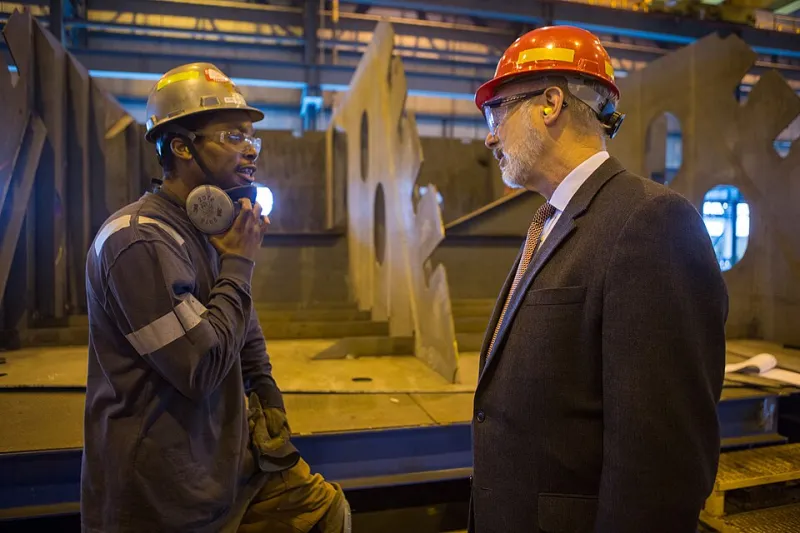
Photo: Foreign and Commonwealth Office, CC BY 2.0, via Wikimedia Commons
Every team has them. The person who knows how the complicated spreadsheet actually works. The one who can talk a customer down from the ledge in four sentences. The colleague who quietly fixes the thing that breaks every third Thursday. They are not on the org chart as trainers, and they have never been asked to deliver a session. But they are already doing the job.
The trouble is that this expertise is usually passed on in fragments — a quick question over the desk, a Teams message, a scribbled note that disappears under a coffee cup. It works, sort of, until the expert is on leave, snowed under, or leaves altogether. Then the team realises it has been relying on a human search engine with no backup.
You do not need to send anyone on a train-the-trainer course to fix this. You need a modest bit of structure and a willingness to ask the right people to share what they already know. Think of it as building a bench of five-minute experts: people who can deliver one short, repeatable session on the thing your team genuinely needs to understand.
Find the people who are already answering the questions
Start with the questions, not the people. For a fortnight, keep a simple log of the things people ask each other. Who do new starters gravitate towards? Which names come up when someone says, 'Just ask…'? Where are the workarounds, the shortcuts, the little rituals that keep the work moving?
You are not looking for the most senior person or the loudest voice in the meeting. You are looking for reliable competence and a willingness to explain. The best internal experts tend to have three things in common: they do the task consistently well, they can describe it without jargon, and they have the patience to answer the same question twice without sighing.
A quick word of caution: don't assume the longest-serving person is automatically the right trainer. Sometimes the person who learned the process most recently is better at explaining it, because they still remember what it was like not to know.
Five minutes is a format, not a compromise
A five-minute expert session is not a rushed version of a proper course. It is a different format altogether. The aim is to close one small, specific gap, not to cover a whole subject. One topic, one outcome, one useful example, and a clear pointer to where the written notes live.
A workable shape is this: what the thing is, when you use it, two real examples, one common pitfall, and who to ask if it goes wrong. That is it. No slides required. It can happen at a desk, over Teams, in the ten minutes before a shift, or as the first item in a team meeting.
Short sessions work because they are easy to attend, easy to repeat, and easy to improve. They also respect the fact that everyone is busy. A fifteen-minute slot with questions at the end is often more useful than a one-hour workshop that nobody can quite justify in the diary.
Brief the expert properly
This is the bit most teams skip. Someone is asked to 'do a quick session' and promptly freezes, because they have no idea what to include or how much detail to give. The result is either a rambling brain-dump or a cancellation.
Give your internal expert a one-page brief. It should cover the outcome, the audience, three questions the session must answer, one real example they can use, one thing that commonly goes wrong, and where people can find more detail afterwards. Keep it short enough to read on a tea break.
Then ask them to rehearse with you for ten minutes. Not to test them, but to help them trim. Most experts over-prepare because they care. Your job is to help them cut the session down to the essential thing, not to turn them into a presenter.
Also, be honest about the time commitment. It is not just the fifteen minutes in the diary. There is a bit of thinking and a bit of preparation. Protect their day job, offer to handle the invitations, and make it clear that saying no is allowed.
Make it repeatable without making it corporate
A one-off session is nice. A repeatable one is useful. Create a simple template that anyone can fill in: the title as a question, three key points, one screenshot or example, and a named contact for follow-up questions. Store these in a shared folder that people can actually find.
Put the sessions on a light schedule — perhaps one every month or two, rotated around the team. Record a short video only if the expert is comfortable and consent is clear. Otherwise, a written one-pager is often enough. The goal is a small library of practical know-how that survives holidays, busy periods, and staff changes.
Avoid over-branding it. You do not need a programme name, a logo, or a launch event. A shared calendar, a simple template, and a bit of gentle prompting will do more than a glossy internal campaign.
Support the bench, don't just applaud it
Internal experts are a cheap training resource, but they are not free. They need encouragement, feedback, and recognition that goes beyond a box of biscuits. Mention their contribution in one-to-ones. Ask what they would like to learn next. Keep an eye on workload so the same helpful person is not asked to run every session.
Track the questions that keep coming back. If the same issue appears three times, it is probably time for another five-minute session or a clearer written note. That is not a failure of the training; it is the training doing its job.
A small experiment for this month
Ask your team to name three things they wish everyone knew. Pick one. Find the person who already knows it. Brief them on a single page. Book fifteen minutes. Run the session. Collect one improvement from the room. Then repeat next month with a different topic and a different expert.
That is how a bench gets built — not with a grand initiative, but with a few short, well-briefed sessions from the people who were already doing the explaining. Your next great trainer is probably two desks over. They just need a format and a thank-you.